


Building the Future with Efficient Project Delivery
Infrastructure development plays a vital role in driving economic growth and improving the quality of life. From highways and industrial facilities to manufacturing plants and commercial buildings, every successful project requires careful planning, quality execution, and effective coordination.
One of the most efficient ways to deliver complex infrastructure projects is through Engineering, Procurement, and Construction (EPC) contracting. This integrated approach simplifies project management by placing all major responsibilities under a single contractor, ensuring better communication, cost control, and timely delivery.
What is EPC Contracting?
EPC stands for Engineering, Procurement, and Construction. Under this model, one contractor manages the complete lifecycle of a project—from engineering and design to procurement of materials, construction, testing, and final handover.
This streamlined approach minimizes risks, reduces delays, and ensures that every phase of the project is executed efficiently.
Key Benefits of EPC Contracting
Single Point of Responsibility
An EPC contractor manages every aspect of the project, reducing coordination challenges between multiple vendors and contractors.
Faster Project Completion
Integrated planning and execution help streamline workflows, minimize delays, and ensure timely project delivery.
Cost Control
Proper planning, efficient procurement, and optimized resource management help reduce overall project costs while maintaining quality standards.
High-Quality Standards
EPC contractors follow strict quality assurance procedures and industry best practices throughout the project lifecycle.
Reduced Project Risk
Comprehensive project management improves safety, minimizes operational risks, and ensures compliance with regulatory requirements.
Industries That Benefit from EPC Services
EPC contracting is widely used across various industries, including:
- Infrastructure Development
- Industrial Manufacturing
- Commercial Construction
- Mining & Mineral Processing
- Oil & Gas Facilities
- Energy & Utilities
- Warehousing & Logistics
- Government Projects
Why Quality Engineering Matters
Every successful infrastructure project begins with sound engineering. Proper planning, structural design, and technical expertise ensure that projects remain safe, durable, and cost-effective throughout their operational life.
Experienced engineering teams can identify potential challenges early, optimize construction methods, and improve overall project performance.
The Role of Technology in Modern Construction
The construction industry is rapidly adopting new technologies to improve efficiency and productivity. Some of the key innovations include:
- Building Information Modeling (BIM)
- Drone-Based Site Surveys
- GPS Machine Control
- Digital Project Management Tools
- Advanced Construction Equipment
- Smart Safety Monitoring Systems
These technologies help improve project accuracy, reduce costs, and enhance workplace safety.
Sustainability in Infrastructure Development
Modern infrastructure projects are increasingly focused on sustainable construction practices. Organizations are adopting environmentally responsible methods such as:
- Efficient resource utilization
- Waste reduction and recycling
- Energy-efficient construction techniques
- Sustainable material sourcing
- Reduced carbon emissions
- Environmentally compliant project execution
Sustainability not only benefits the environment but also creates long-term value for businesses and communities.
Why Choose SKG Inframet?
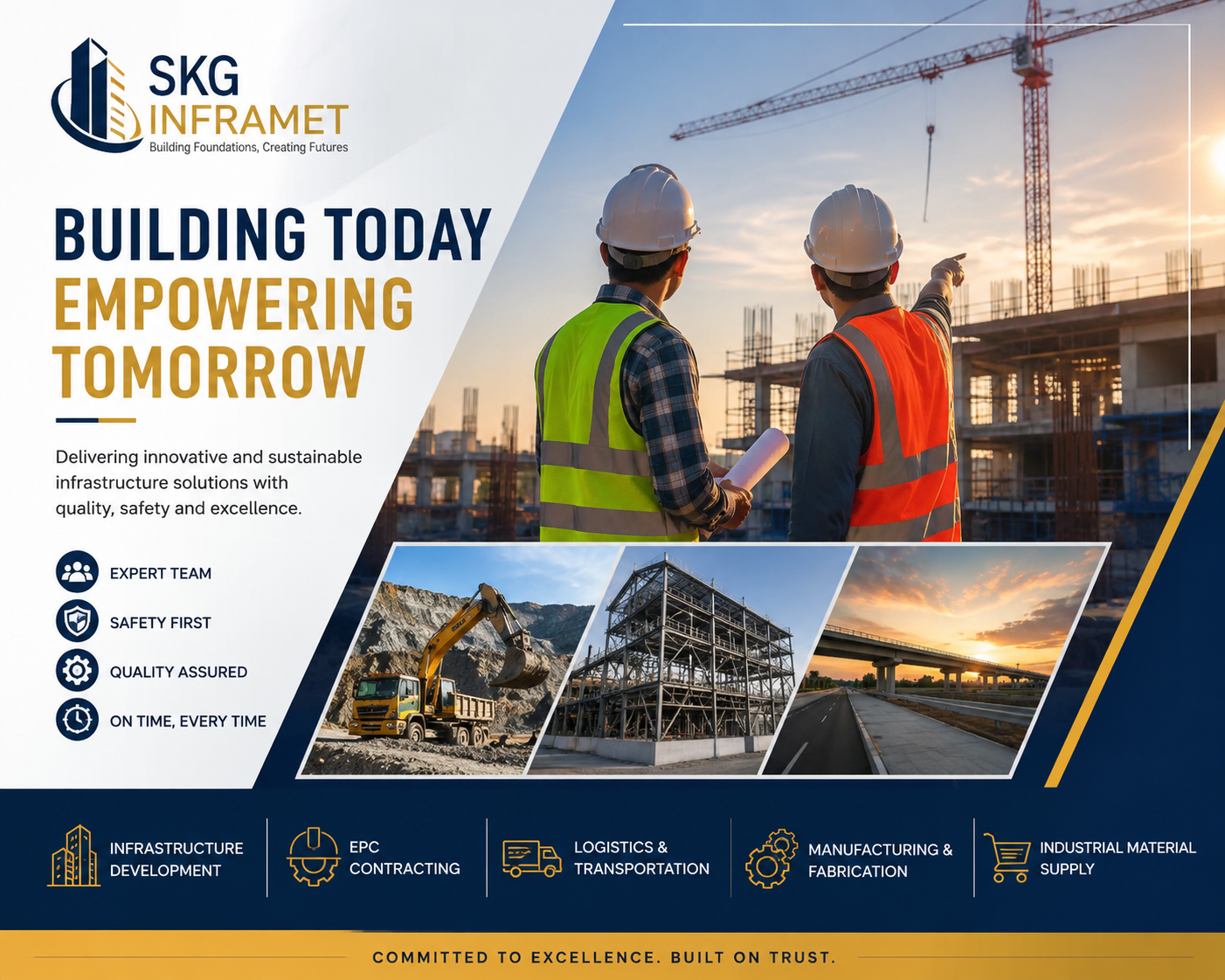
At SKG Inframet, we combine engineering expertise, project management excellence, and a commitment to quality to deliver reliable infrastructure and EPC solutions. Our integrated services cover infrastructure development, industrial construction, logistics, material supply, manufacturing, and mining support, enabling us to meet diverse client requirements with efficiency and professionalism.
Our focus on innovation, safety, and customer satisfaction has made us a trusted partner for infrastructure and industrial projects.